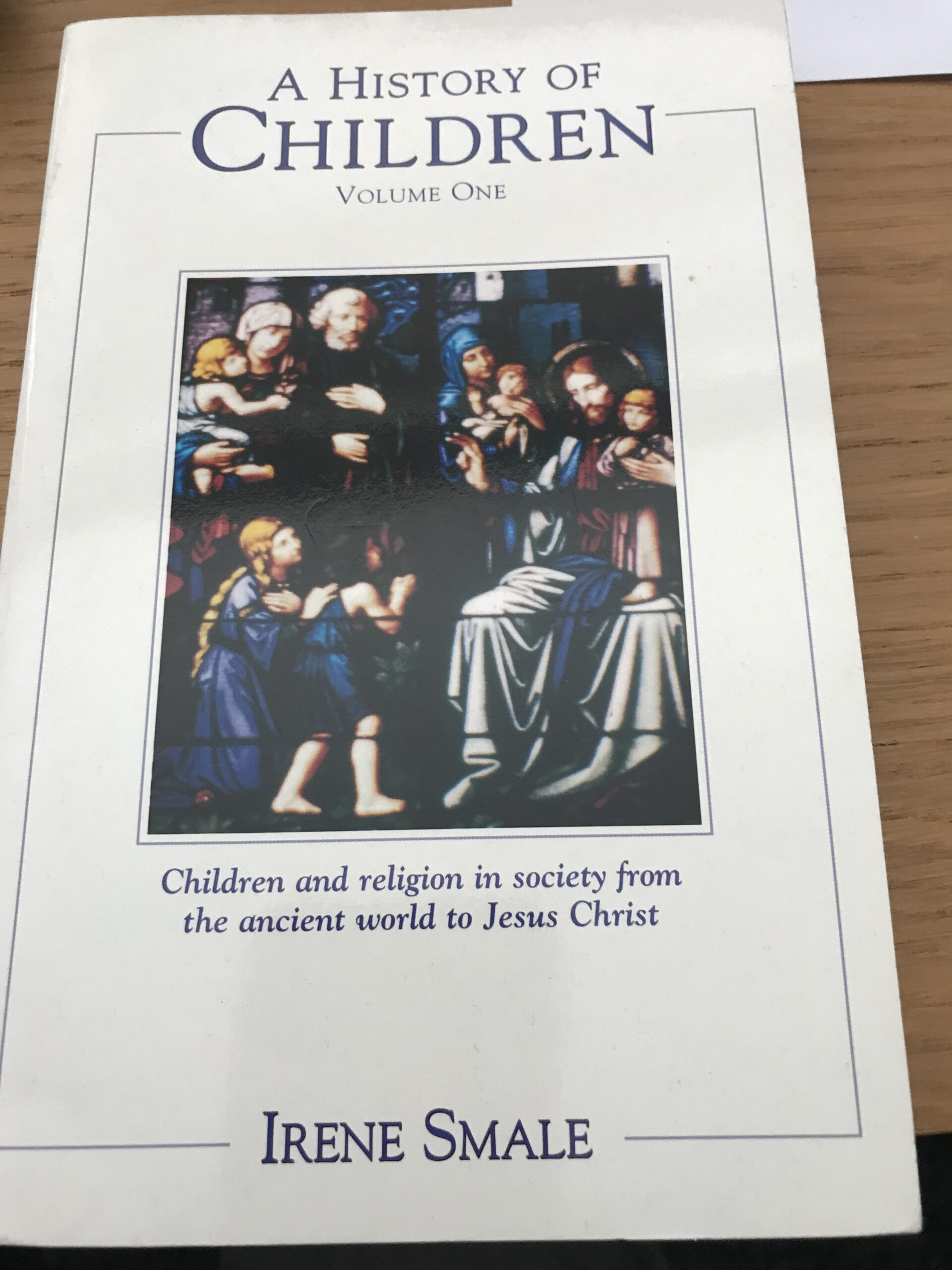
I had the privilege some years ago of meeting Irene Smale, author of A History of Children. I remember her being passionate and compassionate, well-informed, enthusiastic, a true follower of Jesus Christ. Readers may know her as wife of Ian Smale (Ishmael), Christian songwriter and worship leader.
Introduction
On reading A History of Children, I am immediately struck by the amount of research that has gone into the book. The author has read an enormous amount of material to condense it down into a modest book. At times information arrives thick and fast and is not easily digested. This sets the scene for the later chapters which draw more directly on the Bible, Old and New Testaments.
Treatment & mistreatment
Some history emphasizes great leaders, military victories, technological inventions and developments, wonderful art and architecture. But perhaps a culture is best judged n how it treats those weakest within it, the children.
Ancient civilisations
Irene Smale introduces us to five major ancient civilisations; Sumer; Egypt; Sparta; Greece; Rome, plus an analysis of the way were (mis)treated in Canaan.
In a western culture where education is ‘universal,’ available to all children, it seems odd that, in many ancient cultures, education was reserved for very few children.
Canaan
The chapter on Canaan makes for shocking reading. The author makes no apology for this. We can err by minimising or sanitising the alleged blood-thirstiness of the Old Testament or other ancient historical documents.
The nation of Israel, the chosen people of God, was called to remain distinct from the way of life practised by the Canaanites. This was not just a minor ‘improvement’ or a nuanced difference in emphasis. Canaan was a dreadful place to live. Human sacrifice and especially child sacrifice was endemic. Worship of Baal and Molech, referenced frequently in the Old Testament, was accompanied by the sacrifice of innocent children to appease them. Archaeological discoveries confirm this analysis.
Kings from Solomon (1 Kings 11) to Manasseh (2 Kings 21) fell into these dreadful practices. Sections of this chapter make for extremely disturbing reading.
 Israel – distinct from the nations
From an early stage, Israel was called out to be distinct from the nations. Their care for their children was one such way in which this occurred. They were educated, loved, nurtured. They were happy, not fearful of mistreatment, sacrifice, slavery, etc.
The emphasis was on the formation of character within an explicitly monotheistic environment. So, Jewish children were taught to love God and to become truly righteous. The development of character in this way further set the nation apart from other ancient nations.
Example of Christ
Jesus Christ grew up in a Jewish family. He had several brothers and sisters. We understand that Joseph was older than Mary and died before Jesus’ public ministry began. He had become head of the household and provided for the family from working as a carpenter craftsman.
The book refers to Jesus’ attitude to children (page 184ff). He treated them with respect, used them as examples for adults, not vice versa.
Matthew 21 links the second visit of Jesus to cleanse the temple with the shouting out of the children (v12-15). Here is Christ’s scourge against injustice alongside compassion for children, a huge challenge to the religious culture of the day.
Irene Smale cannot but conclude with Christ’s wonderful example in modelling perfect humanity; for us to admire and seek to attain.